How to calculate VAT in Tanzania: adding and removing 18% VAT, with examples
Mainland Tanzania’s standard VAT rate is 18%. How to add VAT to a price, take it out of a VAT-inclusive total and check the VAT on an invoice, with worked examples, plus who must register and how Zanzibar differs.
By the Powercomputers team · 21 November 2026 · 6 min read
The short answer
On Mainland Tanzania the standard VAT rate is 18%. To add VAT to a price, multiply it by 1.18: TZS 100,000 becomes TZS 118,000, of which TZS 18,000 is VAT. To take VAT out of a VAT-inclusive total, divide it by 1.18, or multiply the total by 18/118 to find the VAT alone. Only VAT-registered businesses may charge VAT, and registration is compulsory once taxable turnover reaches TZS 200 million in twelve months. Zanzibar has its own VAT law, administered by ZRA.
Key points
- TRA’s standard VAT rate for Mainland Tanzania is 18%, and exports of goods and services are charged at 0%.
- To add VAT, multiply the price before VAT by 1.18; to remove it, divide the VAT-inclusive total by 1.18.
- The VAT inside a VAT-inclusive total is 18/118 of it, the tax fraction defined in the VAT Act.
- Registration is compulsory at TZS 200 million of taxable turnover in twelve months, or TZS 100 million in six months.
- TRA also lists a 16% rate for supplies paid for by unregistered individuals through a bank or an approved electronic payment system.
- Zanzibar’s VAT is administered by ZRA under its own law, at 15% on most taxable supplies.
The VAT rate on Mainland Tanzania
VAT is a consumption tax charged on taxable goods, services and immovable property each time value is added, on goods and services produced locally and on imports. TRA’s VAT page states that the standard rate is 18% and that exports of goods and services are charged at 0%. Section 5 of the Value Added Tax Act sets the same rate: the VAT payable is the value of the supply or import multiplied by 18%.
TRA also makes clear that VAT is charged only by persons registered for VAT. A business that is not registered should not add VAT to its prices.
VAT works through a credit system. A registered business pays VAT on what it buys (input VAT), charges VAT on what it sells (output VAT) and pays TRA the difference; if its input VAT is higher, it can claim a refund or credit. As TRA puts it, the business collects and remits the tax, and the cost is borne by the final consumer.
How to add VAT to a price
Start from the price before VAT, also called the net or VAT-exclusive price. Multiply it by 18% to find the VAT, then add the two together, or do both steps at once by multiplying the net price by 1.18.
- Net price TZS 100,000: VAT is 100,000 × 0.18 = TZS 18,000, so the total is TZS 118,000.
- Net price TZS 35,000: VAT is TZS 6,300, so the total is TZS 41,300.
- Net price TZS 2,500,000: VAT is TZS 450,000, so the total is TZS 2,950,000.
How to take VAT out of a VAT-inclusive price
Shop prices and many quotations already include VAT. To find the price before VAT, divide the total by 1.18. To find the VAT on its own, multiply the total by 18 and divide by 118. The VAT Act calls this the tax fraction: the rate divided by 100 plus the rate, which at 18% is 18/118.
A common mistake is to take 18% of the VAT-inclusive total. On TZS 118,000 that gives TZS 21,240 instead of TZS 18,000, overstating the VAT by TZS 3,240, because the 18% applies to the net price, not to the total.
- Total TZS 59,000: net price 59,000 ÷ 1.18 = TZS 50,000, and the VAT is TZS 9,000.
- Total TZS 1,180,000: net price TZS 1,000,000, and the VAT is TZS 180,000.
- Total TZS 250,000: net price about TZS 211,864, and the VAT about TZS 38,136.
Input VAT, output VAT and what you pay TRA
For a registered business, the VAT on its sales is not income. Suppose you buy stock for TZS 59,000 including VAT and sell it for TZS 118,000 including VAT. The input VAT on the purchase is TZS 9,000 and the output VAT on the sale is TZS 18,000, so you owe TRA TZS 9,000 on that sale.
Returns are monthly. TRA says VAT is payable on or before the 20th day of the following month, which is also the deadline for submitting the return, and returns are filed online through the taxpayer portal. TRA’s 2025/26 tax guide adds that when the 20th falls on a Saturday, Sunday or public holiday, the return is due on the next working day.
Other rates on TRA’s list
Most sales use 18%. TRA’s rate table also lists 0% for exports of goods and certain services and for some transport services for goods in transit, and 16% where a supply is paid for by an individual who is not registered for VAT through a bank or an electronic payment system approved by the Commissioner General. TRA’s 2025/26 guide describes the 16% as a discount rate.
The same method works at any rate. At 16%, multiply by 1.16 to add VAT and divide by 1.16 to remove it; the tax fraction becomes 16/116. Check with TRA or your tax adviser which payments qualify before you use any rate other than 18%.
Who has to register for VAT
TRA’s VAT page sets the threshold: registration is mandatory for any person whose taxable turnover reaches TZS 200 million within twelve months, or TZS 100 million (half the threshold) within six months ending at the end of the previous month. A person who becomes liable must apply to the Commissioner General within 30 days, through TRA’s taxpayer portal.
The turnover threshold does not apply to professional service providers, to government entities or institutions carrying on economic activities, or to intending traders who can show evidence that they are about to start business, such as contracts, tender awards, business plans or bank financing. If a person fails to apply when liable, the Commissioner General may register them.
A registered business receives a certificate showing its Taxpayer Identification Number (TIN) and VAT registration number. TRA requires both numbers on returns and other documents used for official VAT purposes, and the certificate must be displayed in a noticeable position at the principal place of business.
Zanzibar is different
VAT in Zanzibar is administered by the Zanzibar Revenue Authority (ZRA) under the Value Added Tax Act No. 4 of 1998, not by TRA. ZRA’s VAT page lists 15% on taxable goods and services supplied in or imported into Zanzibar, 18% on financial services (banking), insurance, telecommunications and certain digital services, and 0% on exports from Zanzibar. ZRA sets its registration threshold at taxable turnover of TZS 100 million and above.
To work with the 15% rate, multiply by 1.15 to add VAT and divide by 1.15 to remove it. TRA’s VAT page also notes that VAT paid under Zanzibar VAT law on goods transferred to Mainland Tanzania can be claimed as input tax credit, provided the goods meet the requirements of the law.
How Powercomputers can help
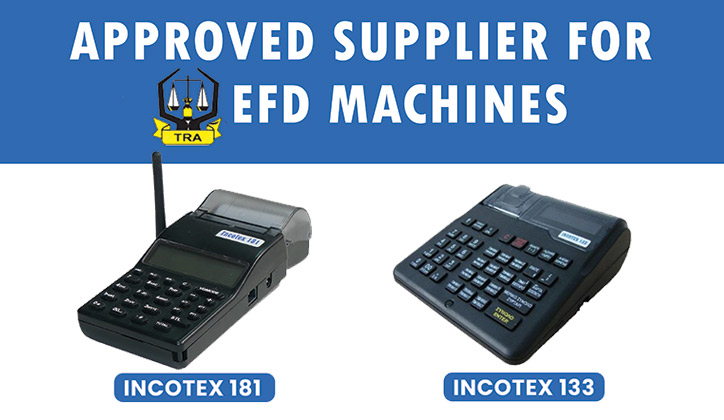
Accurate VAT starts with accurate sales records. Powercomputers has been an authorised EFD supplier for the Tanzania Revenue Authority since 2013 and sells and supports Incotex, DATECS and Tremol machines, with free usage training and support over the telephone. POWER VFD, its own VFD solution, works with Android devices, Tally ERP, TallyPrime, SAP Business One, Microsoft Dynamics, OMEGA ERP and POWER POS. In Zanzibar, fiscal receipts go through ZRA’s VFMS rather than TRA’s EFD and VFD system.
Frequently asked questions
On Mainland Tanzania the standard rate is 18%, set by section 5 of the VAT Act, and exports are charged at 0%. TRA also lists 16% for supplies paid for by unregistered individuals through a bank or an approved electronic payment system. Zanzibar sets its own rates through ZRA, with 15% on most taxable supplies.
Divide the VAT-inclusive price by 1.18 to get the price before VAT; the VAT is the difference, or the total multiplied by 18/118. For example, TZS 59,000 including VAT is TZS 50,000 plus TZS 9,000 VAT.
TRA says registration is mandatory once taxable turnover reaches TZS 200 million within twelve months, or TZS 100 million within six months. The threshold does not apply to professional service providers, government entities or intending traders with evidence of their plans.
No. TRA states that VAT is charged by persons registered for VAT only. Registered businesses show their TIN and VAT registration number on documents used for official VAT purposes.
Sources
This guide was written from these pages: