
13 ways to prevent fuel losses at a filling station
Find and stop losses in deliveries, tanks, pumps and payments with daily reconciliation, routine checks and automatic tank gauging.
By the Powercomputers team · 13 ideas
The short answer
Reconcile wet stock every day: opening stock plus deliveries minus pump sales should equal what is in the tanks. Dip or gauge tanks before and after every delivery, check each pump with a verified measure before opening, record meter readings at every shift change, and investigate any difference that keeps growing in one direction. Automatic tank gauging makes these checks continuous instead of occasional.
Fuel is a filling station’s most valuable stock, and losses can hide in many places: a short delivery, a leaking tank or line, a pump that dispenses more than it records, water in a tank, or takings that do not match the litres sold. At the volumes a station sells, small daily differences add up quickly.
Most of the controls below are routines your team can start tomorrow. Automatic tank gauging, cameras and electronic payments make them easier to keep and harder to get around.
- 1
Reconcile wet stock every day
Each day, take the opening stock, add deliveries and subtract pump sales to get the stock you should have, then compare it with what the tanks actually hold. Small differences come and go with temperature and meter tolerances. A difference that keeps growing in one direction points to a leak, theft or a metering fault.
- 2
Measure every delivery in
Dip or gauge the receiving tank before the tanker offloads and again once the fuel has settled, and compare the difference with the delivery note. Check the compartment seals before offloading, keep a manager present throughout, and record any shortage on the note before signing.
First steps
- Dip the tank before offloading
- Check the tanker seals against the delivery note
- Dip again after settling and record the difference
- 3
Check every pump before opening
WMA’s regulations require the owner or user of a fuel pump to keep a verified check measure of at least 20 litres and use it to check the pumps’ accuracy every day before business starts. Record each result. A pump that drifts either gives fuel away or short-changes customers, and both cost the station.
- 4
Hold each attendant to their pump readings
Record each pump’s totaliser reading at the start and end of every shift, and compare the litres dispensed with the cash, mobile money and card payments each attendant hands in. Since 1 July 2026, a government order has required payment for goods and services at filling stations to be made or received electronically, which leaves a record of every payment and makes this check faster.
First steps
- Record totaliser readings at every shift change
- Count takings per attendant, by payment type
- Settle any shortage before the next shift starts
- 5
Issue a fiscal receipt for every sale
On the mainland, TRA’s fiscal device for petrol stations is the electronic fiscal pump printer (EFPP), which is connected to the pump and prints a receipt for every sale. Pump-linked receipts give an independent record of litres sold to check against meters and takings. In Zanzibar, receipts go through ZRA’s VFMS instead.
- 6
Check tanks for water
Water in a tank means lost sellable volume, contaminated fuel and possibly a leak. Check for water at every dip, with water-finding paste on the dipstick or the water reading from your tank gauge, and investigate any rise straight away.
- 7
Install automatic tank gauging
An automatic tank gauge (ATG) measures the fuel level, water level and temperature in every tank continuously and converts each level into litres using the tank’s calibration table. It records deliveries, can alert you to high and low levels, and turns daily reconciliation from a manual chore into a quick check.
- 8
Keep tank calibration charts current
The litres a dip or a gauge reports are only as accurate as the tank’s calibration chart, which converts a height into a volume. Make sure every tank has a current chart, and have a tank recalibrated after any repair or damage that could change its shape.
- 9
Watch for leaks in tanks and lines
A slow leak shows up as a steady loss that reconciliation cannot explain. Inspect pipework, joints and dispensers regularly, watch for fuel smells or stains around the forecourt, and call in a specialist to test the tanks and lines if losses persist.
- 10
Point cameras at pumps, offloading point and cash office
CCTV over each pump island, the tanker offloading point and the cash office helps settle disputes about deliveries, payments and pump readings, and discourages tampering. Keep enough days of footage to cover your reconciliation cycle.
- 11
Lock fill points and dip points
Fit locks to tank fill points, dip points and any valve that could be used to draw fuel outside the pumps, and keep the keys with the manager. Record who opened what, and when, during each delivery.
- 12
Keep the records EWURA expects
If your station is licensed under EWURA’s Petroleum (Wholesale, Storage, Retail and Consumer Installation Operations) Rules, 2022, you must keep tanks, flow meters and pumps calibrated, monitor, record and reconcile all stock delivered, stored and dispensed as EWURA directs in writing, keep those records for at least twelve months, and promptly report any loss or gain outside normal operating patterns. Good daily records make compliance and investigations easier.
- 13
Review the trend every week
Plot each tank’s daily variance over several weeks, not day by day, so you see trends rather than noise. Agree in advance the level of variance that triggers an investigation, and who carries it out.
Sources
- WMA: Weights and Measures (General) Regulations, GN 288 of 2019 (PDF)
- EWURA: The Petroleum (Wholesale, Storage, Retail and Consumer Installation Operations) Rules, 2022, GN 150 (PDF)
- EWURA: The Petroleum (Wholesale, Storage, Retail and Consumer Installation Operations) (Amendment) Rules, 2025, GN 112 (PDF)
- TRA: The Electronic Transactions (Mandatory Electronic Payments for Specified Transactions) Order, 2026, GN 158C (PDF)
- TRA: E-Fiscal Devices (EFD)
- Zanzibar Revenue Authority: Virtual Fiscal Management System (VFMS)
- TRA: The Tax Administration Act, Cap. 438 R.E. 2023 (PDF)
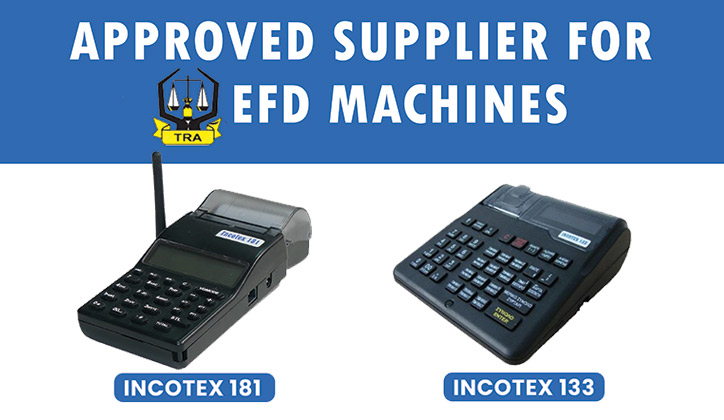
EFD machines
All types of EFD machines, Incotex, DATECS and Tremol, from a TRA-authorised supplier since 2013.
- TRA-authorised since 2013
- Incotex · DATECS · Tremol
- Free delivery
- Tanzanian IT company since 2001
- Branch offices across Tanzania
Often bought together: TRA VFD solution, Point of sale (POS)
Frequently asked questions
Take the opening stock in each tank, add the deliveries and subtract the litres sold through the pumps: that is the stock you should have. Subtract the closing stock you measured. A small difference that swings both ways is normal; one that grows in the same direction day after day needs investigating. The free fuel loss calculator on this site does the sum.
Every day. WMA’s Weights and Measures (General) Regulations, 2019 require the owner or user of a fuel pump to keep a verified check measure of at least 20 litres and use it to check the pumps’ accuracy every day before business starts. Record each result so that any drift is noticed early.
No, the two work together. An automatic tank gauge measures every tank continuously and makes daily reconciliation quick, but staff should still know how to dip a tank by hand to confirm a reading, check the gauge and keep control if it fails. Keep the dipsticks and the skill, and use the gauge for day-to-day control.
If your station is licensed under EWURA’s 2022 petroleum rules, which cover licensed operations in Mainland Tanzania, you must keep records of stock delivered, stored and dispensed for at least twelve months and show them to EWURA on demand. Separately, the Tax Administration Act requires the documents behind your tax figures to be kept for five years from the relevant date.
More efficiency ideas
14 ways to cut fuel and running costs in your fleet
See how every litre is used, then cut idling, speeding, detours, empty trips and missed servicing across your vehicles.
14 ways to reduce stock loss in shops and wholesale stores
Stop stock leaking away at receiving, in the store, at the till and between counts, with habits first and technology where it helps.
14 ways to speed up bookkeeping, VAT and tax records
Turn month end from a rescue into a review: record daily, enter each sale once, reconcile weekly and keep the records the law asks for.
Tell us what your business needs
Get a quote or a callback from the Powercomputers team: hardware, software, EFD and VFD, security, web or support.